
日本の聖パトリックデー
St. Patrick’s Day in Japan: How an Irish Holiday Conquered the World (and Dodged the Culture Wars)

This is a Grok collaboration of a substack I originally published in March 2024.
Back in the fall of 2002, I stepped into a public high-school classroom for the first time in four decades to teach adult ESL three nights a week. It was equal parts exciting and nerve-wracking. Like any new teacher, I was desperate for materials that actually worked. One veteran suggested Easy English News—a simple, engaging newspaper-style reader that felt like the grown-up version of the old Weekly Reader.
I’m a news junkie, and my students were curious, educated adults, so current events became a staple of our lessons. One March evening, with St. Patrick’s Day looming, I planned a lighthearted unit on the holiday’s American traditions. When the latest issue of Easy English News arrived, I expected the usual green-beer-and-shamrocks story. Instead, I found an article about St. Patrick’s Day in Japan—and how wildly popular it had become there.
Given Japan’s well-earned reputation for cultural insularity, the news caught me completely off guard. I knew Carnaval was huge (thanks to the massive Japanese community in Brazil), but an Irish holiday? That seemed unlikely. Surely there couldn’t be a huge Irish expat population fueling it.
Yet the celebration has exploded since its humble beginnings. The first unofficial St. Patrick’s Day parade in Tokyo took place on March 15, 1992. A small group of Irish and Japanese left the Irish Embassy in Roppongi, led by a lone bagpiper in emerald green, and marched to a record store. It was technically unsanctioned and barely noticed—which was probably for the best. The next year the parade moved to the elegant, tree-lined Omotesando-dori boulevard near Meiji Shrine. From that modest start, parades and parties have spread across the entire country.
My students—whatever their nationality—loved the topic. When I later taught in the regular public-school system, everyone showed up wearing green and threw themselves into the festivities with genuine enthusiasm.
It turns out Japan is far from alone. St. Patrick’s Day has become a truly global phenomenon. According to The Economist, there are roughly 70 million people of Irish descent worldwide, thanks to centuries of emigration that peaked during the 1840s famine. A quarter of Ireland’s population left for new lives, mostly in the United States, Britain, Canada, and Australia.
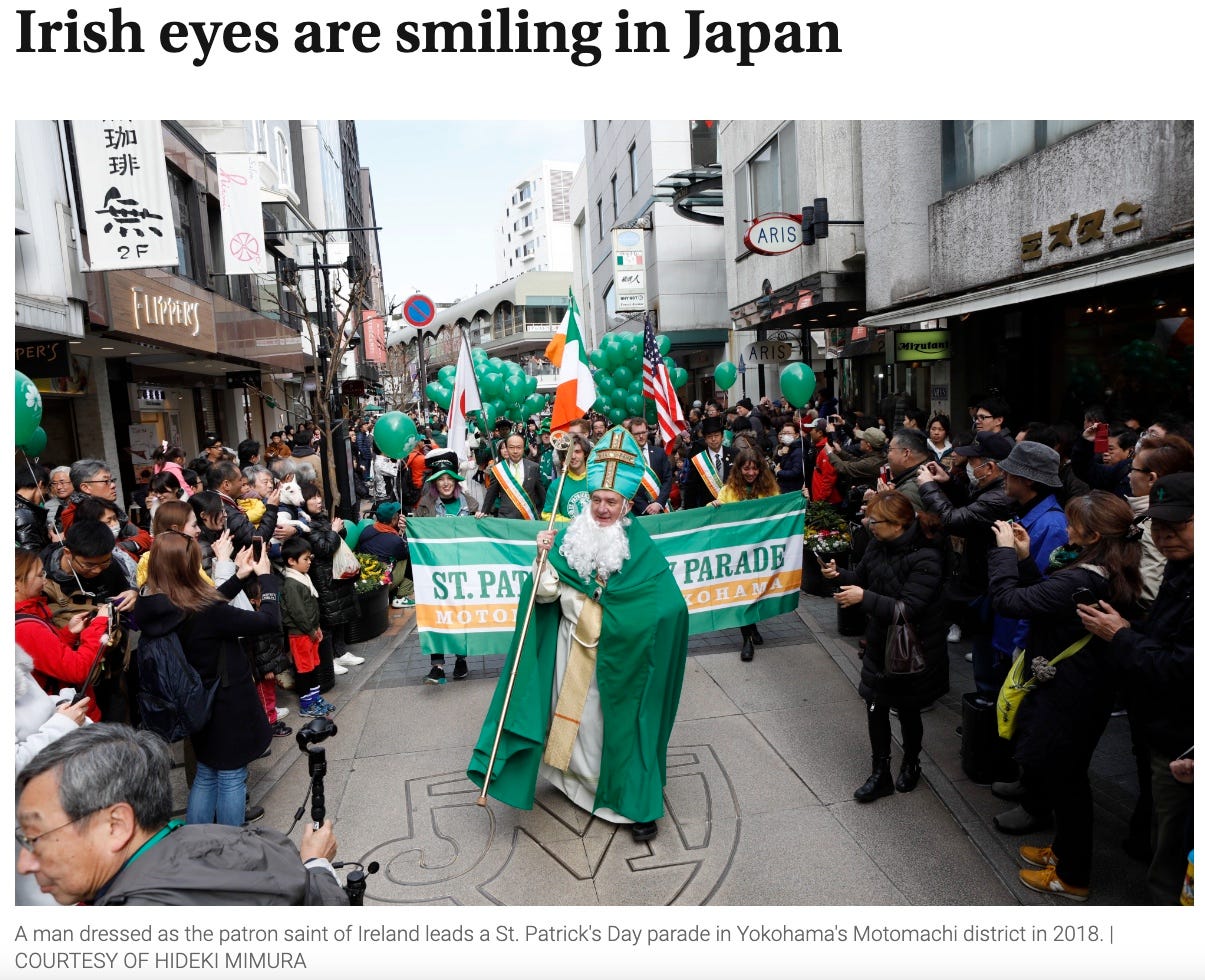
Surprisingly, the modern version of the holiday was largely invented in America. In 1762, Irish soldiers in New York City marched in the first recorded St. Patrick’s Day parade. Today, parades happen in dozens of countries, and revelers around the globe down an estimated 13 million pints of Guinness.
But the real secret sauce? Irish pubs. There are now about 8,500 of them scattered from Nepal to Dubai to Mongolia. In the 1990s, Guinness began exporting not just beer but an entire “Irish pub” concept—complete with architectural plans, training, and even pre-fabricated bars. In just 25 years, the company helped open authentic-feeling pubs in more than 150 countries. The Irish government has smartly ridden the wave, sending ministers to over 50 nations each year to promote “Brand Ireland,” which is now one of the fastest-growing national brands on earth.
Growing up in Chicagoland, I absorbed plenty of Irish culture by osmosis. I later married an Irish-American woman whose roots trace back to County Kerry. The city’s political and police leadership has long been dominated by Irish names—most famously the Daley dynasty. And yes, every March the Chicago River is famously dyed a brilliant green. (In the 1950s of my childhood, the river was already a murky pea-soup color from pollution, so the dye didn’t exactly ruin the view.)
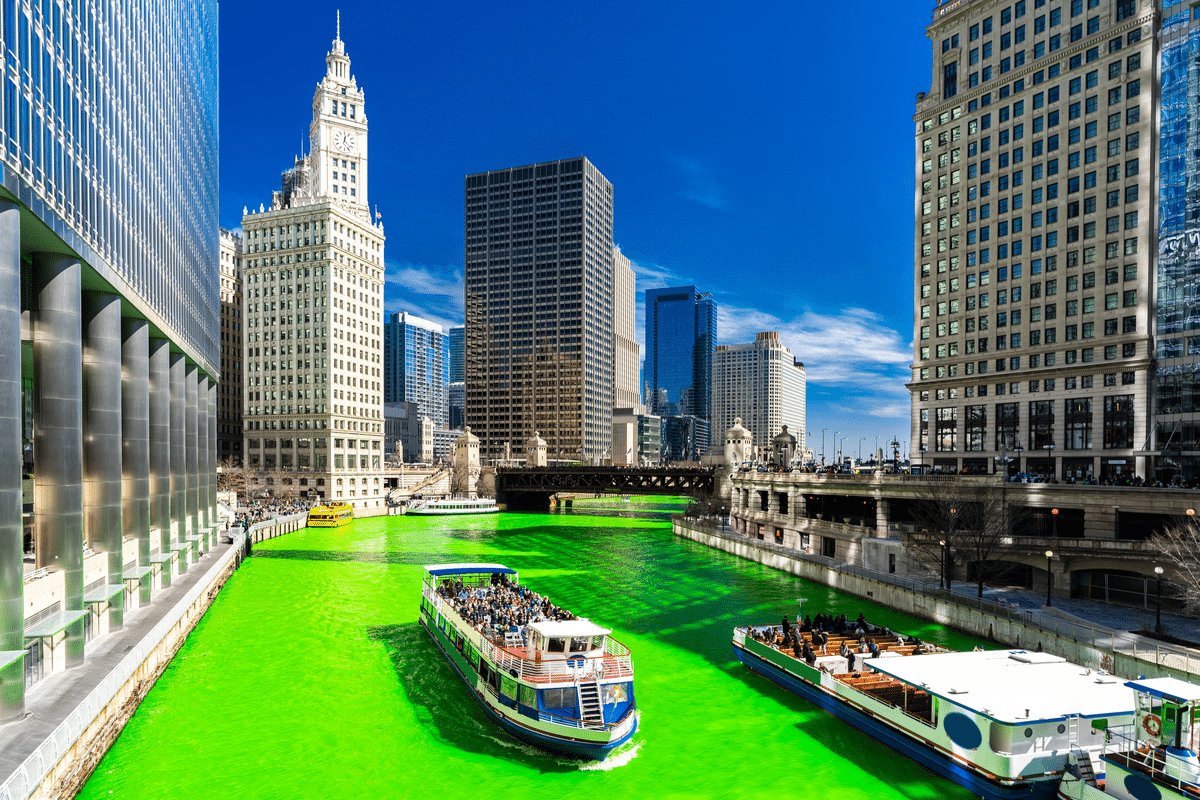
What fascinates me most is how universal the holiday has become without triggering the usual outrage machine. Parades, heavy drinking, meat-heavy meals—those are serious carbon-footprint offenses by modern standards. Dumping dye into a major waterway would normally draw environmentalist fury (surely some tiny aquatic creature must be inconvenienced?). And dressing up in Irish green, attempting jigs, and feasting on corned beef and cabbage looks suspiciously like cultural appropriation.
Yet somehow the “woke scolds” who police Halloween costumes and sombreros have remained strangely silent. No viral think-pieces accusing participants of “Irish face” or demanding we decolonize the shamrock. St. Patrick’s Day just keeps rolling along, green beer in hand, proving that some traditions are apparently too much fun to cancel.Sláinte—and Erin go Bragh, wherever you are. Even in Tokyo.
I had no idea Japan got into the Irish Day and St. Paddy's Day so much. Quite a parade. I'm half Irish so I adhere to all the hoopla that goes with it. Thanks Ross and bottoms up.